Work, Connect, Belong

A municipal program that provides parents with a shared workspace and leisure environment alongside supervised care tailored to infants, supporting a gradual return to work while creating time for study, errands, or simply a moment of rest.

For many young families today, early parenthood is characterized by both the desire and the need to balance caring for a new baby with maintaining a career from the very beginning of the child's life. Feedback from city residents—particularly those working in the high-tech and academic sectors—together with a municipal survey of 177 women, revealed a clear need for a framework that enables parents to maintain employment continuity and make a gradual return to work without becoming completely separated from their baby.

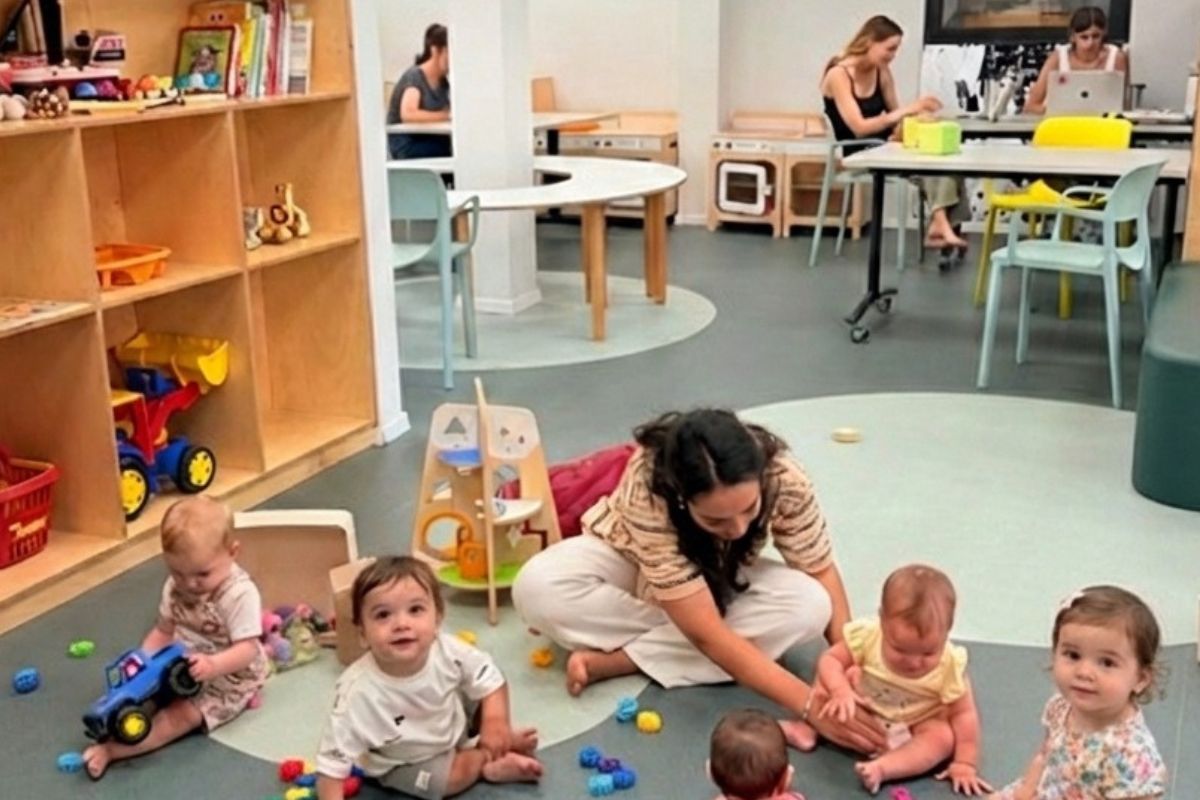
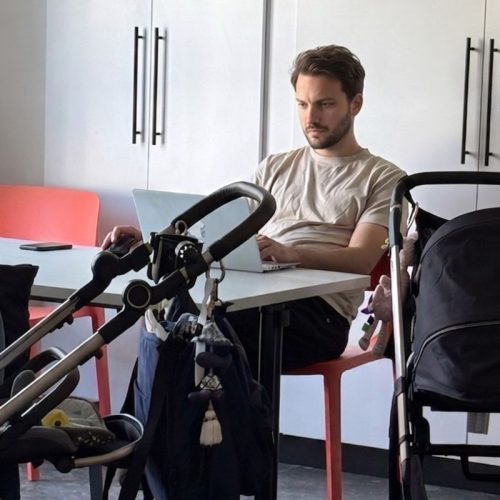
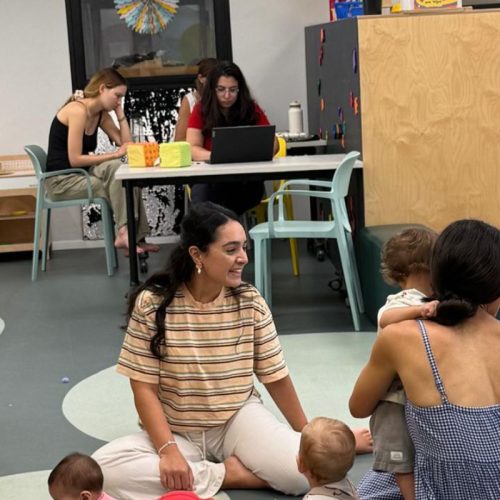
In response to this reality, and as part of the city's commitment to advancing gender equality and innovation in social services, the municipality developed a flexible, accessible, and low-commitment model to bridge the gap between home and formal childcare. Rather than creating a full educational setting, the program offers a hybrid environment where parents can work either alongside their child or in a nearby quiet room, while their baby enjoys supervised care and opportunities for social interaction.


The project was co-designed in close partnership with two active residents, from its initial conception through program design, to address an identified social and community need. The model was then refined through a summer pilot implemented at two community centers, where its underlying assumptions were tested in practice.

The pilot consisted of two consecutive two-hour sessions, offered by advance registration at an affordable price. It provided age-appropriate supervised care for infants, allowing parents to work on site. Each community center included a dedicated infant play area equipped with soft flooring and toys, led by a facilitator whose role was to engage the children and respond to their day-to-day needs (excluding caregiving tasks such as feeding, diaper changing, or putting infants to sleep). Adjacent workspaces were equipped with tables, power outlets, internet access, and coffee stations, enabling parents to work nearby while remaining close to their children.

Throughout the pilot, the model was refined based on lessons learned during implementation:

  • Age-specific focus: The target age range was refined to infants from birth until they begin crawling or standing. The program was also divided into two age groups—birth to crawling, and crawling to first steps—to ensure a safe and developmentally appropriate environment.
  • Operational flexibility: Infants who fell asleep during the session were allowed to remain in the space, enabling parents to continue working without interruption.
  • Session schedule: Sessions were rescheduled to start at 10:00 a.m. rather than 9:00 a.m. to better accommodate parents' schedules, and a short break was introduced between the two sessions to allow the facilitator sufficient time to prepare.

Following the pilot's success and strong demand from residents, the municipality intends to adopt the model as a permanent part of the city's service infrastructure. The program has already expanded to five additional community centers across central Tel Aviv. Day-to-day operations are managed locally by each participating community center, allowing the program to be tailored to the needs of each community while enabling the model to be replicated without the need for a large centralized management structure. Each center operates on a different day of the week, creating a coordinated citywide schedule that gives residents the flexibility to choose the time and location that best suit their needs.

Municipal Partners:

  • Community, Culture and Sports Administration, Central District
  • Beit Tami Community Center
  • Hashmona'it Community Center


Duration of the Activity

Two two-hour sessions; participants may register for one or both consecutive sessions.

Location

Community centers

Maintenance Required

Setup and dismantling of equipment before and after each session

Cost Components

Facilitator fee and one-time equipment purchases (safety barriers, floor mats)

Suitable for Ages

Parents on parental leave and their infants
11

Impact

  • Demonstrated demand: The pilot generated exceptionally strong demand, with virtually no cancellations. The program's WhatsApp community has grown to approximately 270 parents.
  • Efficient use of existing municipal resources: The program makes effective use of existing municipal facilities, such as classrooms and play spaces, during morning hours when they would otherwise remain unused, creating significant community value.
  • A gradual transition to formal childcare: Parents reported that the program provided a safe and supportive environment for practicing gradual separation from their baby, helping prepare both parent and child for the transition to daycare or another regular childcare setting.
  • Reduced isolation and professional networking: The program creates opportunities for parents to connect around careers and professional development, offering an alternative to more traditional parent support groups focused primarily on parenting.
  • Parental well-being and employment flexibility: The model enables mothers and fathers to balance parenting with work, helping them maintain their professional identity while on parental leave.
  • Advancing gender equality: The program supports women following childbirth by enabling them to maintain employment continuity, pursue further study, or explore career changes within a supportive environment.
  • Low marketing costs: Strong community engagement has enabled the program to grow entirely through word of mouth and parent networks, eliminating the need for a municipal advertising budget.


What we learned along the way

  • The value of resident-led innovation: The project's success demonstrated the importance of embracing ideas that originate with city residents. Close collaboration throughout the process ensured that the program addressed a genuine community need, strengthened trust in the municipality, and reinforced residents' sense of agency and influence.
  • Flexibility is essential: Because caring for infants is inherently unpredictable, the model must remain flexible by allowing cancellations up to 12 hours in advance, registration for a single session, and the freedom to choose among different program locations.
  • Professional networking: Beyond creating opportunities for parents to connect, the program fostered conversations about careers and professional development. Many participants—particularly mothers—formed professional and business connections that helped reduce the sense of professional isolation often experienced during parental leave.
  • Strong community centers drive participation: The pilot revealed a clear relationship between the strength and engagement of the local community and immediate participation rates, highlighting the critical role of community centers in the program's success.
  • Age grouping is critical: Separating infants into two developmental groups—birth to crawling and crawling to first steps—proved essential for both safety and the quality of the program. Experience showed that mixing newborns with more mobile infants was not conducive to a shared environment that met the needs of both groups.
  • Demand is seasonal: Demand fluctuates throughout the year, reflecting patterns in parental leave. As many leave periods end in September, when children enter formal childcare, demand declines moderately before increasing again in January.
  • The facilitator's role is central: The facilitator must be able to establish a calm, reassuring environment that gives parents the confidence to leave their child in capable hands. The role extends well beyond supervision; it is about creating the sense of trust and security that allows parents to focus on their work with peace of mind.
  • Rapid experimentation accelerated learning: Launching the pilot quickly, with minimal bureaucracy and a "test and learn" approach, made it possible to refine the model based on real-world experience as it evolved toward becoming a permanent municipal service.
12