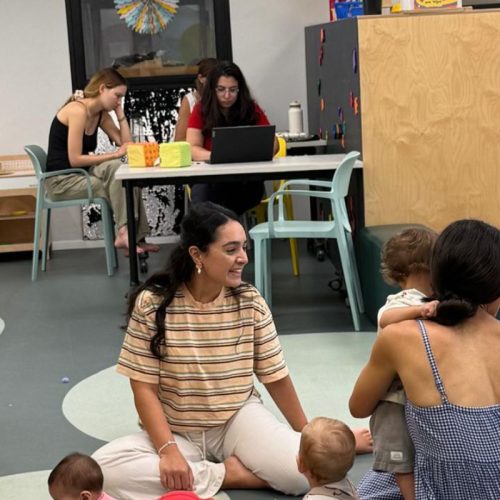
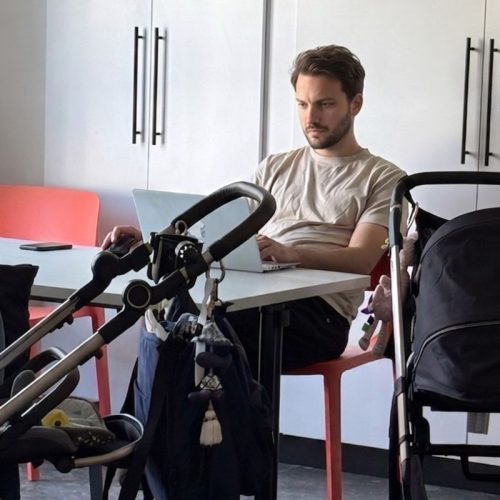
For many young families today, early parenthood is characterized by both the desire and the need to balance caring for a new baby with maintaining a career from the very beginning of the child's life. Feedback from city residents—particularly those working in the high-tech and academic sectors—together with a municipal survey of 177 women, revealed a clear need for a framework that enables parents to maintain employment continuity and make a gradual return to work without becoming completely separated from their baby.
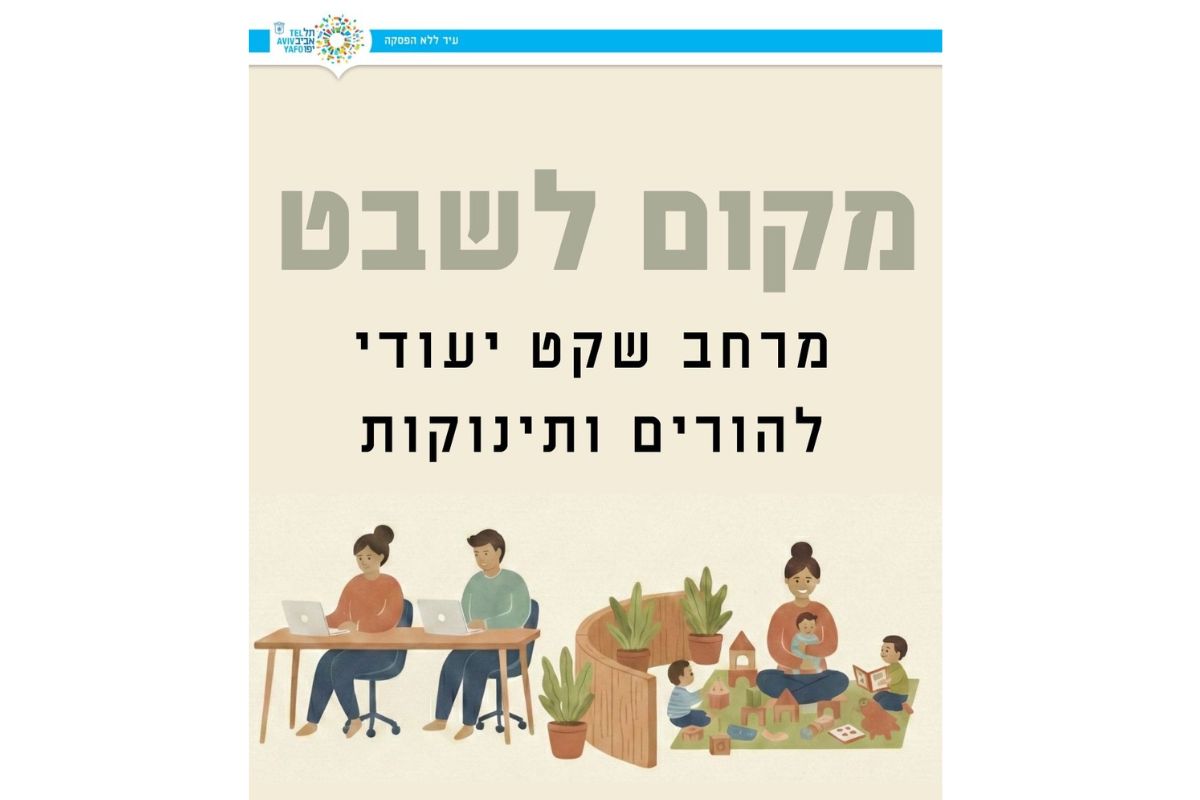
In response to this reality, and as part of the city's commitment to advancing gender equality and innovation in social services, the municipality developed a flexible, accessible, and low-commitment model to bridge the gap between home and formal childcare. Rather than creating a full educational setting, the program offers a hybrid environment where parents can work either alongside their child or in a nearby quiet room, while their baby enjoys supervised care and opportunities for social interaction.
The project was co-designed in close partnership with two active residents, from its initial conception through program design, to address an identified social and community need. The model was then refined through a summer pilot implemented at two community centers, where its underlying assumptions were tested in practice.
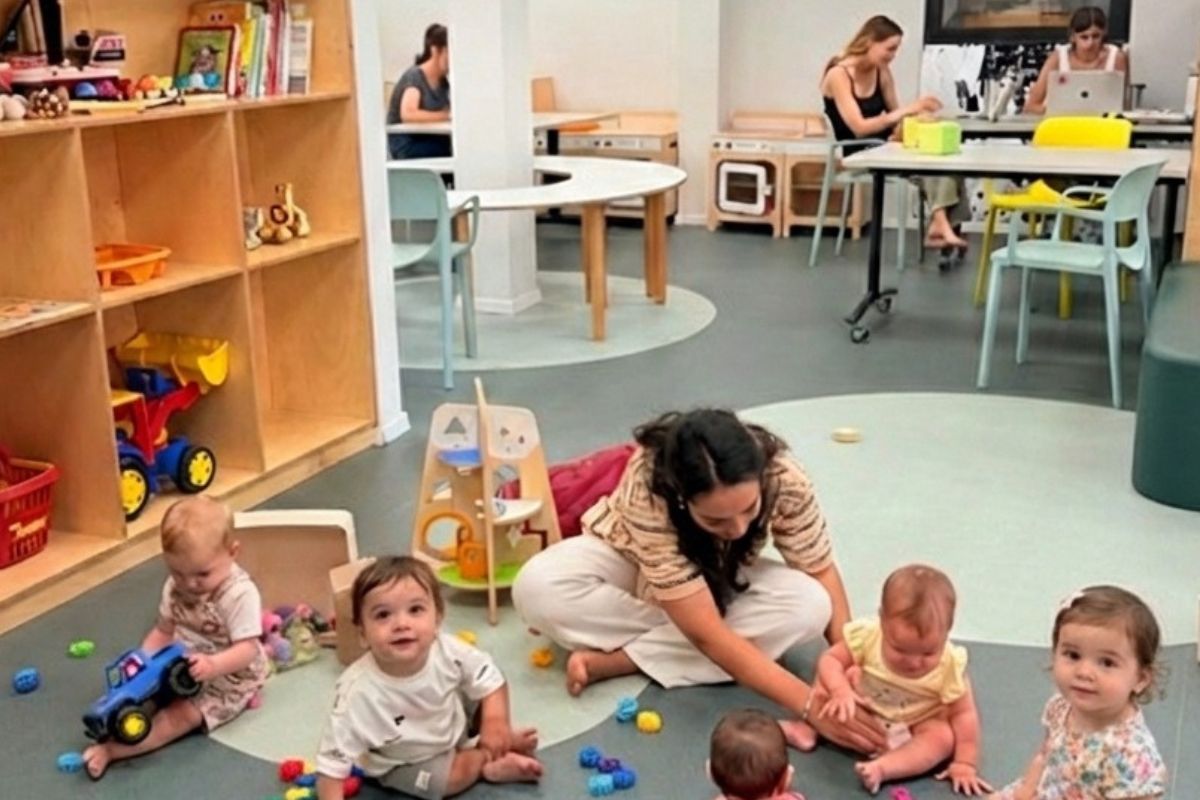
The pilot consisted of two consecutive two-hour sessions, offered by advance registration at an affordable price. It provided age-appropriate supervised care for infants, allowing parents to work on site. Each community center included a dedicated infant play area equipped with soft flooring and toys, led by a facilitator whose role was to engage the children and respond to their day-to-day needs (excluding caregiving tasks such as feeding, diaper changing, or putting infants to sleep). Adjacent workspaces were equipped with tables, power outlets, internet access, and coffee stations, enabling parents to work nearby while remaining close to their children.
Throughout the pilot, the model was refined based on lessons learned during implementation:
Following the pilot's success and strong demand from residents, the municipality intends to adopt the model as a permanent part of the city's service infrastructure. The program has already expanded to five additional community centers across central Tel Aviv. Day-to-day operations are managed locally by each participating community center, allowing the program to be tailored to the needs of each community while enabling the model to be replicated without the need for a large centralized management structure. Each center operates on a different day of the week, creating a coordinated citywide schedule that gives residents the flexibility to choose the time and location that best suit their needs.
Municipal Partners:
Two two-hour sessions; participants may register for one or both consecutive sessions.
Community centers
Setup and dismantling of equipment before and after each session
Facilitator fee and one-time equipment purchases (safety barriers, floor mats)
Parents on parental leave and their infants